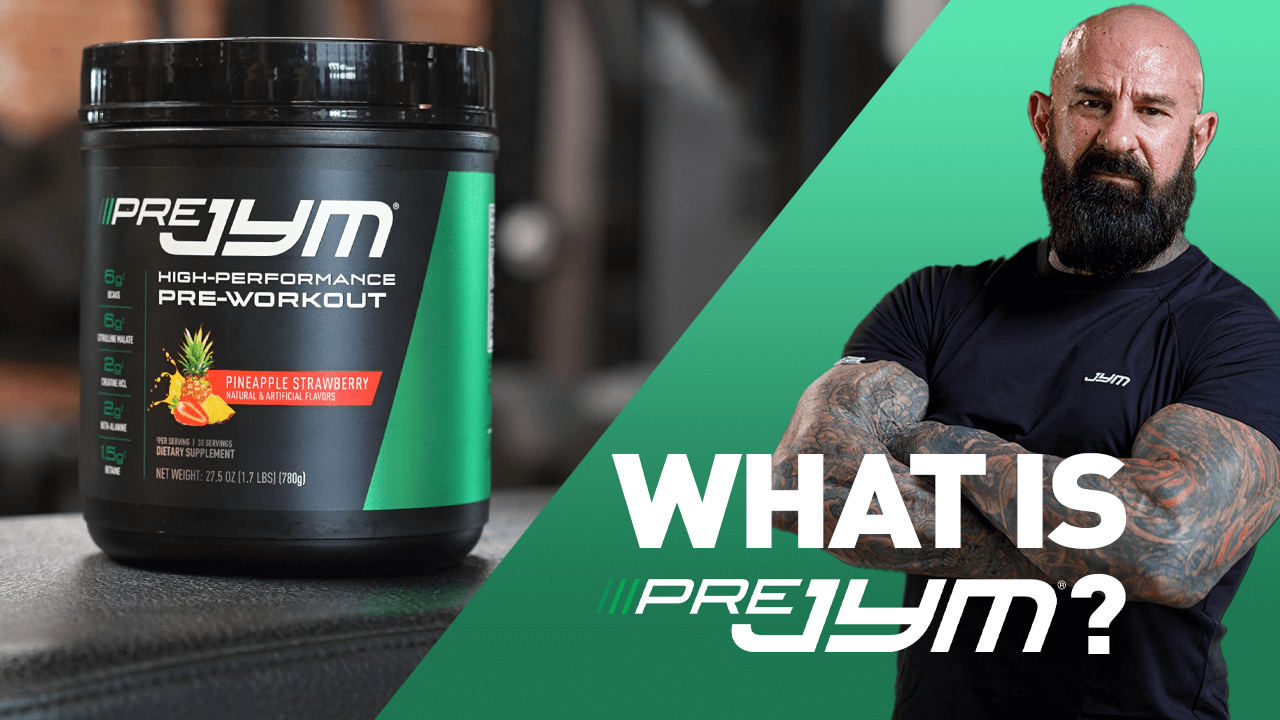
Both forms of creatine work. Here’s how creatine HCl is different, and why it’s the form I use.
Think all creatine is the same? In one way, it is: once creatine reaches your muscles, it does the same job no matter what form it came in. It helps your muscles regenerate ATP, the energy behind every hard set, which is why creatine is one of the most researched supplements you can take for strength and muscle.*
Where the forms differ is how the creatine gets there. The type you see most often is creatine monohydrate. Creatine hydrochloride, or creatine HCl for short, is creatine bound to a hydrochloride group, which makes it far more soluble in fluid. That difference matters most for people who don’t do well with monohydrate.
Where Creatine Monohydrate Falls Short for Some People
Creatine monohydrate works, and it’s the most-studied form of creatine there is. If it works for you, there’s no reason to stop taking it.
But monohydrate doesn’t dissolve well. You’ve probably seen it: a layer of powder sitting at the bottom of your shaker. For some people, creatine that doesn’t dissolve can mean cramping, bloating, or diarrhea, and larger single doses make those problems more likely. One study found that taking 10 grams of creatine at once caused more diarrhea than splitting the same amount into two servings.
I’m one of the people monohydrate doesn’t agree with. It has never sat well with my stomach, and I’ve heard from thousands of people who have the same experience. That’s a big reason I use creatine HCl.
The HCl Difference
Adding the hydrochloride group to creatine lowers its pH, making it more acidic, and that dramatically increases how well it dissolves. You’ll see it the first time you mix creatine HCl in water: it dissolves almost instantly, with nothing settling at the bottom of the glass.
That solubility is the practical advantage. Creatine HCl mixes easily, can be delivered in a smaller serving, and may be easier on the stomach for people who have trouble with monohydrate.
Does Creatine HCl Work Better?
This is where the argument often gets ahead of the science. Research comparing creatine HCl and monohydrate head to head is still limited, and a recent study found no significant differences between the two in the strength and body-composition measures it tested. So I won’t tell you HCl builds more muscle than monohydrate.
What I will tell you is that both forms deliver creatine, and creatine is what does the work. If monohydrate works for you, keep taking it. If it upsets your stomach, or you’re tired of the grit, creatine HCl gives you another way to get your creatine every day.
Creatine Timing
I’ve recommended taking creatine both before and after workouts for more than a decade. It’s what I’ve seen work best in the gym, and research supports the approach.
Still, there’s an ongoing debate about whether creatine is better taken pre-workout or post-workout. A 2013 study by my colleague Dr. Jose Antonio looked at exactly that. Recreational bodybuilders took 5 grams of creatine monohydrate either immediately before or immediately after their workouts for four weeks. The researchers reported no significant difference between the groups in lean mass, body fat, or strength. A weaker statistical analysis hinted that post-workout might have a slight edge, but Dr. Antonio was clear that the difference wasn’t significant.
No study has compared taking creatine both before and after training against taking it only once. But in a 10-week study from Australian researchers, weight-trained subjects who took a protein, carbohydrate, and creatine supplement immediately before and after their workouts gained more lean muscle and strength than subjects who took the same supplement in the morning and evening. They also had higher muscle creatine and glycogen levels, both important for performance and growth. Because that shake included protein and carbs, it can’t isolate creatine’s effect, but it’s exactly how I recommend taking creatine: around your workouts, alongside protein and carbs.
My advice hasn’t changed: take creatine both before and after your workout, and take it every day, including rest days.
How I Use Creatine HCl
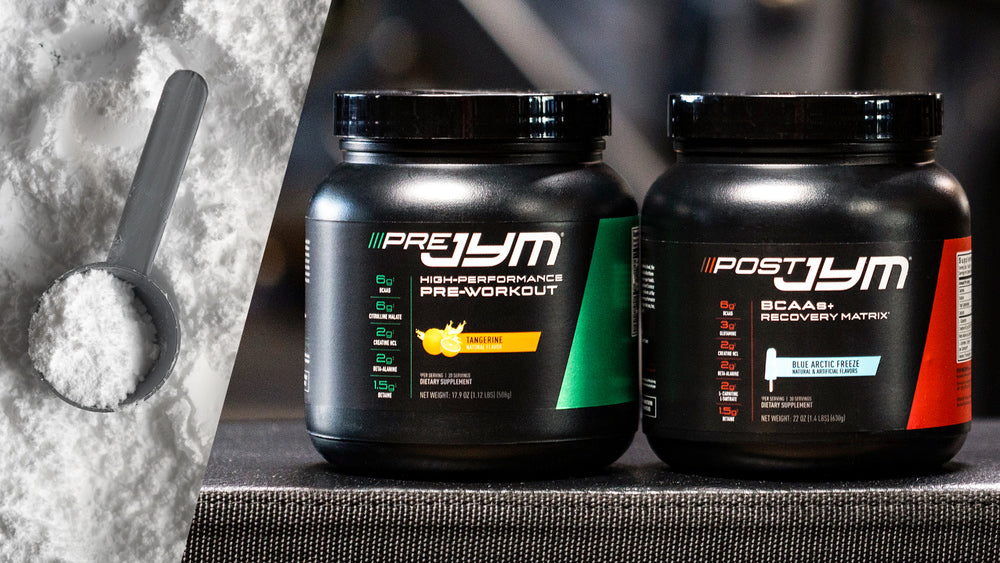
That’s why I put creatine HCl in both Pre JYM and Post JYM BCAAs+. Each delivers 2 grams of creatine HCl per serving, so you get 2 grams before training and another 2 grams after. Pre JYM Stim-Free delivers the same 2 grams without stimulants.
Creatine monohydrate isn’t bad. It just isn’t the only option, and for anyone it doesn’t agree with, creatine HCl is a simple way to take creatine consistently.
References
Antonio J, Ciccone V. The effects of pre versus post workout supplementation of creatine monohydrate on body composition and strength. Journal of the International Society of Sports Nutrition. 2013;10:36.
Cribb PJ, Hayes A. Effects of supplement timing and resistance exercise on skeletal muscle hypertrophy. Medicine & Science in Sports & Exercise. 2006;38(11):1918–1925.
Gufford BT, et al. Physicochemical characterization of creatine N-methylguanidinium salts. Journal of Dietary Supplements. 2010;7(3):240–252.
Londoño-Velásquez D, et al. Creatine monohydrate versus creatine hydrochloride on strength and body composition in elite team-sport athletes: A placebo-controlled randomized clinical trial comparing low dosages. Journal of the International Society of Sports Nutrition. 2025;22(sup1):2533658.
Ostojic SM, Ahmetovic Z. Gastrointestinal distress after creatine supplementation in athletes: Are side effects dose dependent? Research in Sports Medicine. 2008;16(1):15–22.